
Call 214-506-0671


Married a US Citizen After Being Placed in Removal Proceedings? Here's What You Need To Know
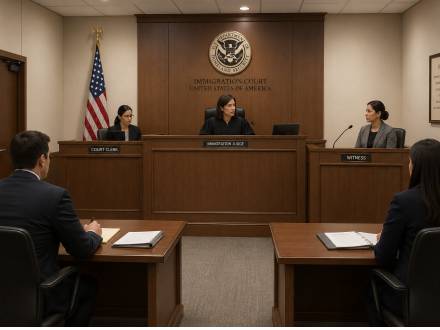
If you were placed in removal proceedings and then married a US citizen, here is the hard truth: the government already presumes your marriage is a fraud. You are not going to get an easy continuance to wait for your I-130 to be adjudicated. You need to be ready to walk into immigration court and prove your marriage is real.
What Is a Hashmi Hearing?
A Hashmi hearing is named after Matter of Hashmi, 24 I&N Dec. 785 (BIA 2009), a Board of Immigration Appeals decision that set out the framework an immigration judge uses when deciding whether to give you more time in removal proceedings because of a pending I-130 petition filed by your US citizen spouse.
In plain language, the judge is not just going to wait while USCIS adjudicates your I-130. The judge wants to know whether your petition is likely to be approved and whether you are likely to get a green card if it is. If the judge is not convinced of both, the continuance is denied and your case moves toward a final order of removal.
Why Your Marriage Is Presumed Fraudulent
Under INA Section 204(g) and Section 245(e), if you marry a US citizen or lawful permanent resident while you are in removal, deportation, or exclusion proceedings, federal law presumes the marriage was entered into to evade immigration laws.
That presumption stays in place unless you and your spouse prove by clear and convincing evidence that your marriage is bona fide. That is a much higher burden than the preponderance standard most immigration applicants face. It also means USCIS will not approve the I-130 until you affirmatively request the bona fide marriage exemption in writing.
Why the Climate Has Changed
If someone you know got married in removal proceedings ten years ago, they may tell you it was not a big deal and the judge gave them continuance after continuance. That is no longer the norm.
Matter of L-A-B-R-, 27 I&N Dec. 405 (A.G. 2018) narrowed the discretionary continuance standard. Immigration judges are now directed to focus on whether you are likely to receive the I-130 approval and whether that approval would materially change the outcome of your removal case. Generic delays and USCIS backlogs no longer carry weight.
Matter of Jin, 29 I&N Dec. 441 (BIA 2026) is the most recent signal that the BIA is sharpening its focus on marriage fraud. The agency now has new procedural mechanisms to revisit whether a marriage was actually bona fide, even years after an I-130 is approved. That heightened skepticism has trickled down to immigration judges and DHS trial attorneys, who are far more likely to challenge marriages that happened after removal proceedings began.
EOIR case completion goals under the current administration also give judges strong incentive to deny continuances and push cases to a final order rather than letting them sit for years.
What This Means for You
A Hashmi hearing is not a formality. The judge expects you to come prepared to establish, on the record, that your marriage is real and that your I-130 is likely to be approved. Walking in without that preparation is how cases get lost, even when the marriage is genuine.
At Hafey & Karim, we represent clients in Hashmi hearings in immigration courts across the country, including Concord, Dallas, Houston, and the San Francisco Bay Area. If you are facing one of these hearings, do not wait until the week before to figure out your strategy.
Schedule a consultation so we can review your case.
