
Call 214-506-0671

Immigration Scammers Are Targeting Desperate Immigrants. Here Is How to Protect Yourself in 2026
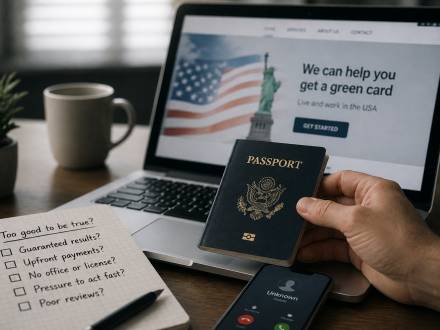
Immigration scams are surging across the country in 2026. These are not small time con artists. These are sophisticated criminal operations that look completely real. They have professional websites, hundreds of social media followers, official looking logos, and in some cases, they even set up fake immigration courts complete with a person dressed as a judge, all over a video call.
Real people are losing thousands of dollars. Real families are having their cases destroyed. And in many situations, victims are too afraid to report it because of their immigration status.
Who Is Being Targeted?
Scammers target immigrants who are scared. It is that simple.
In the current climate, with mass deportation fears, policy changes happening every week, and courts backed up for years, millions of immigrants are desperately looking for help. That desperation is exactly what these criminals exploit.
The communities most commonly targeted include:
Undocumented immigrants who are afraid to walk into a real law office. Asylum seekers with pending cases and no clear path forward. TPS holders whose status is uncertain. Green card and citizenship applicants who have been waiting for years and are eager to move their cases forward. Spanish speaking and other non English speaking immigrants who may have difficulty verifying credentials online.
These scams are being reported across New York, Michigan, Florida, Iowa, Washington, and many other states. No community is immune.
How These Scams Work
Understanding how these operations work is the first step to protecting yourself.
Step 1: They Find You on Social Media
Most of these scams start on Facebook, Instagram, or WhatsApp. The scammers run paid advertisements that look exactly like ads from real law firms or well known nonprofits. They use the names, logos, and even photos of legitimate organizations including Catholic Charities USA, real attorneys, and city government offices.
One woman in the Bronx lost over $5,000 after contacting what she believed was a legitimate law firm on Facebook. It was not. Everything, the profile, the reviews, the branding, was completely fake.
Step 2: They Build Your Trust
Once you contact them, they do not immediately ask for money. They are patient. They ask about your case. They express concern. They use details from their personal lives, a sick family member, a church they belong to, to seem trustworthy and relatable.
Some scammers even use AI generated photos so their fake attorneys look professional and convincing.
Step 3: They Stage a Fake Court Hearing
This is where these scams become truly sophisticated and truly dangerous.
Some scammers have been staging entirely fake virtual immigration hearings. They put on judicial robes. They sit in front of the American flag. They have other people playing the role of government officials. The hearing looks completely real on video and the victim walks away believing their case was handled by the U.S. immigration court system.
It was not. Nothing was filed. Nothing was done. The money is gone and in some cases, the fake paperwork they submitted can actually hurt the victim's real immigration case.
Step 4: They Ask for More Money
After the initial fees, scammers often come back for more. They claim there are additional court fees, filing costs, or urgent payments needed to prevent deportation. Some victims have paid anywhere from $1,300 to $11,000 and some have been asked for even more.
Once they have taken everything they can get, they disappear.
The Warning Signs You Cannot Ignore
Knowing what to look for can save you thousands of dollars and protect your immigration case. Here are the most important red flags.
1. They Guarantee Results
No legitimate immigration attorney can promise you a specific outcome. Immigration law is complex and results depend on many factors. If someone tells you they can guarantee your green card, your asylum approval, or your visa, walk away immediately.
2. They Found You on Social Media
Real immigration attorneys do not typically hunt for clients through Facebook DMs or WhatsApp messages. If an attorney reached out to you first through social media, that is a serious warning sign.
3. They Ask for Cash, Wire Transfer, Zelle, or Prepaid Cards
Legitimate law firms accept standard forms of payment and provide receipts. If someone insists on being paid through wire transfer, Zelle, Venmo, Cash App, or prepaid gift cards, stop all communication immediately.
4. They Are Not Licensed
Every attorney practicing in the United States must be licensed by the state bar of the state in which they practice. Before you hire anyone, go to your state's official bar association website and look them up by name. If they are not there, they are not a lawyer.
5. They Offer Prices That Seem Too Good to Be True
Immigration legal fees are real. Complex cases cost real money because real work goes into them. If someone is offering to handle your entire case for a suspiciously low price, ask yourself why.
6. They Pressure You to Act Fast
Scammers create urgency. They will tell you that if you do not pay immediately, you will be deported, your case will be dismissed, or you will lose your chance. Real attorneys give you time to review agreements, ask questions, and make informed decisions.
7. They Have No Physical Office
Ask for an address. Try to visit or call during normal business hours. Search the address on Google Maps. A real law firm has a real location. If the only way to reach your attorney is through WhatsApp, that is not a law firm.
What Is Notario Fraud?
In many Latin American countries, the word notario refers to a highly trained legal professional, someone similar to an attorney. In the United States, a notary public is something completely different. A notary in the U.S. is only authorized to witness the signing of documents. They have no legal authority to practice immigration law, give legal advice, or represent anyone in immigration court.
However, many immigrants especially from Latin America are not aware of this difference. Scammers exploit this gap in knowledge by calling themselves notarios to imply legal expertise they do not have.
If anyone calls themselves a notario and offers to help with your immigration case, they are not authorized to do so. This is called notario fraud, and it is illegal.
What Happens to Your Case If You Get Scammed?
Beyond the financial loss, immigration scams can seriously damage your legal case. Here is what can happen.
Fraudulent applications can be filed in your name containing false information that disqualifies you from benefits you were actually eligible for. Deadlines can be missed because your attorney never actually filed anything, and by the time you find out, the window has closed. Your record can be flagged if fraudulent paperwork was submitted, because it becomes part of your immigration history. Your personal information is stolen and scammers collect your documents, your family information, your address, and can use that information for identity theft.
This is why it is so important not to hand your documents to anyone you have not verified as a real, licensed professional.
How to Find a Legitimate Immigration Attorney
Here is how to protect yourself and find real legal help.
Check the State Bar Website. Every state has an official bar association with a public directory of licensed attorneys. Search by name before you hire anyone. If they are not in the directory, they are not a licensed attorney.
Our managing attorney, Shahzeen Karim, is licensed in Illinois and her partner, Ryan Hafey, is licensed in California. Both are able to represent clients in all states.
Look for Accredited Representatives. If you cannot afford a private attorney, you may be able to get help from a Department of Justice accredited representative. These individuals are authorized by the federal government to provide immigration legal services and are listed on the EOIR website.
Contact a Nonprofit Immigration Legal Services Organization. Many legitimate nonprofits provide free or low cost immigration legal help. Look for organizations affiliated with Catholic Charities, the International Rescue Committee, or local legal aid societies. Always verify the organization through their official website, not through a social media ad.
Call the USCIS Contact Center. If you have questions about your immigration case, you can contact USCIS directly at 1-800-375-5283. They will not provide legal advice, but they can confirm whether certain applications have been received or processed.
Never Pay in Cash or Through Unofficial Channels. Always request a signed fee agreement before any money changes hands. Keep copies of all your paperwork and all communication.
How to Report Immigration Fraud
If you believe you have been scammed, report it. You have the right to do so regardless of your immigration status, and your report can help protect others in your community.
You can report immigration fraud to the USCIS Tip Line at 1-800-375-5283 or online at uscis.gov/report-fraud. You can also report to the Federal Trade Commission at reportfraud.ftc.gov, your State Attorney General's Office, the EOIR Fraud and Abuse Prevention Program, or local law enforcement.
Reporting may feel scary. But staying silent allows these scammers to keep hurting others. You are not alone and you will not be targeted for reporting fraud.
Final Thoughts
The people running these scams are counting on one thing: your fear. They know you are scared. They know you feel like you have no options. And they are using that vulnerability against you.
But knowledge is your protection.
Know the warning signs. Verify before you trust. Never pay through unofficial channels. And if something feels wrong, it probably is.
You worked too hard to get here. Do not let a criminal on Facebook take it away from you.
If you have questions about your immigration case or need help finding legitimate legal resources, reach out to a licensed immigration attorney. The right help is out there and you deserve it.
This blog post is for informational purposes only and does not constitute legal advice. Immigration laws and policies change frequently. Please consult a licensed immigration attorney for guidance specific to your situation.


Our firm provides representation for people throughout the United States. From our Concord office, we serve clients in San Francisco, Oakland, San Rafael, San Pablo, Richmond, Berkeley, Alameda, San Leandro, Hayward, Fremont, San Bruno, San Mateo, Palo Alto, San Jose, Mountain View, Milpitas, Cupertino, Santa Clara, and Campbell. Additionally, we serve clients in Texas cities including, Plano, Frisco, Allen, Carrollton, Farmers Branch, Richardson, Garland, Mesquite, Irving, Grand Prairie, Arlington, Euless, Bedford, Grapevine, Coppell, and Fort Worth.
Results listed are not a guarantee or indication of future case results.