
Call 214-506-0671


Recent Blog Posts
Immigration Judge Denied Your Case? How to Appeal
Receiving a denial from an immigration judge can be overwhelming. After months or even years of preparing your case, hearing the evidence, and waiting for a decision, it may feel like you have run out of options.
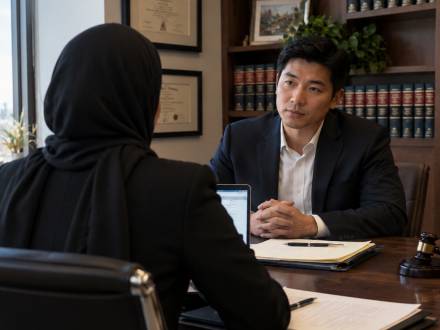
But a denial does not necessarily mean the end of your immigration case. Depending on the decision and your circumstances, you may have the right to appeal to the Board of Immigration Appeals (BIA). If an asylum denial is the reason you are reading this, you still have options to explore.
If an immigration judge denied your asylum application, cancellation of removal, or another form of relief, understanding how to appeal an immigration court decision is critical. Deadlines are strict, and the decisions you make immediately after a denial can affect your ability to challenge the ruling.
Step 1: The 30-Day Deadline to Appeal an Immigration Judge Decision
The first step is determining whether you can appeal the immigration judge’s decision and when your appeal must be filed.
Fifth Circuit Bond Ruling: Is It Unconstitutional?
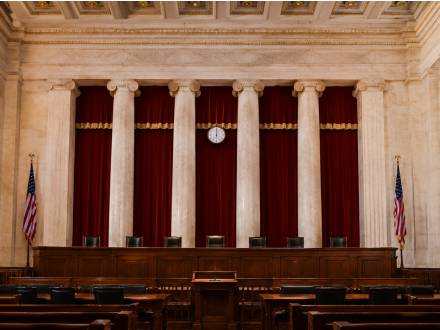
On Friday, October 23, 2026, the full Fifth Circuit Court of Appeals ruled 10 to 7 that people who entered the United States without inspection have no constitutional right to an individualized bond hearing. The decision covers Texas, Louisiana, and Mississippi. It reverses a three-judge panel that had found the policy unconstitutional as applied to people who had lived here for more than a decade.
For many immigrants and their families, this ruling feels like the end of a basic protection. Here is why many lawyers believe it goes too far.
What the policy does
Since July 2025, ICE has treated anyone who entered without inspection as an "applicant for admission." Under that label, the government says they must be held without bond while their removal case is pending. An immigration judge cannot even consider whether the person is a danger or a flight risk.
Why this raises a due process problem
Immigration Court: Your Individual Hearing Guide
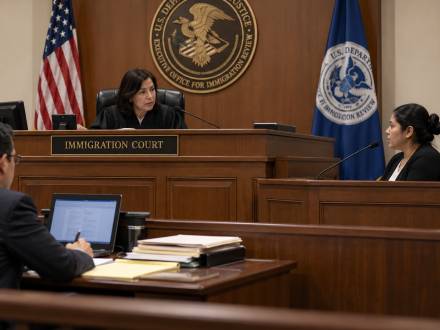
Your individual hearing is the most important day in your immigration court case. It is the day you present your evidence, tell your story under oath, and ask the immigration judge to let you stay in the United States.
For many people, the waiting is the hardest part. Some families wait years for this date. When the notice finally arrives, it is normal to feel nervous, especially if you do not know what will happen inside the courtroom.
This guide explains what an individual hearing is, how it works in Bay Area immigration courts such as the Concord Immigration Court, who will be in the room, how the hearing moves from start to finish, and what happens after the judge decides. Knowing what to expect will not change the facts of your case, but it can help you stay calm, focused, and prepared.
How to Check Your Asylum Case Status in Immigration Court and With USCIS
Your Case Can Change Without Warning
You filed for asylum. Maybe you have a court date months away. Maybe you are waiting on USCIS for an interview. Either way, you might assume the government will tell you if something changes.
In 2026, that is a risky assumption. Immigration courts are moving hearings to new dates, new times, and even new locations with very little notice. Notices get lost in the mail. And if you miss a hearing, a judge can order you removed without you ever being in the room.
The good news is that you can check your own case online, for free, in a few minutes. This guide shows you how, step by step, whether your case is in immigration court or with USCIS.
First: Where Is Your Asylum Case?
Asylum cases are handled in one of two places, and how you check depends on which one has your case.
- Immigration court (EOIR). If you are in removal proceedings, a judge decides your asylum case. You probably received a Notice to Appear (NTA) or a hearing notice from the court.
Supreme Court to Decide Immigrant Bond Hearings
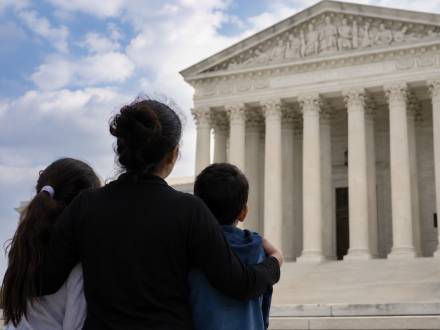
When a family member is detained by Immigration and Customs Enforcement (ICE), most families expect that an immigration judge will review the case and decide whether their loved one can be released on bond while the case moves forward. For many people, especially those who have lived in the United States for years, have no criminal record, and have close family ties here, a bond hearing has long been the path home.
Since 2025, however, many families have been told that their loved one is not eligible for bond at all. On October 1, 2026, the United States Supreme Court agreed to decide whether that policy is lawful. The case, Barbosa da Cunha, will affect immigrants and their families across the country, including here in California. This article explains what the case is about, who may be affected, and what families can do while they wait for a decision.
What Is a Bond Hearing?
A bond hearing is a hearing before an immigration judge to decide whether a person who is detained by ICE may be released while their deportation case, also called a removal case, continues. At the hearing, the judge considers whether the person poses a danger to the community and whether the person is likely to return for future court dates. If the judge is satisfied on both points, the judge may set a bond amount. Once the bond is paid, the person can return home and continue fighting the case with the support of their family, rather than from a detention center.
ICE Shooting Austin Texas: What Happened & Your Rights
On Sunday afternoon, September 20, 2026, a federal Immigration and Customs Enforcement officer shot and seriously wounded a Venezuelan immigrant working as a DoorDash driver in North Austin. The victim was shot in the torso during what law enforcement described as an immigration enforcement operation. He was transported to a local hospital in serious but stable condition.
This is not an isolated incident. This shooting represents the second ICE shooting in Texas in 2026 and reflects an escalating pattern of aggressive immigration enforcement operations under the current Trump administration.
What We Know About the Austin Shooting
The shooting occurred near Anderson Square and Research Boulevard in North Austin, just blocks from the home of Austin City Councilmember Mike Siegel. According to witnesses and officials at the scene:
- A federal ICE agent discharged a firearm, striking the victim once in the torso
- At least two bullet holes were visible on the passenger side of the victim's vehicle
September 2026 Visa Bulletin: Major Advances in Family-Based Green Cards
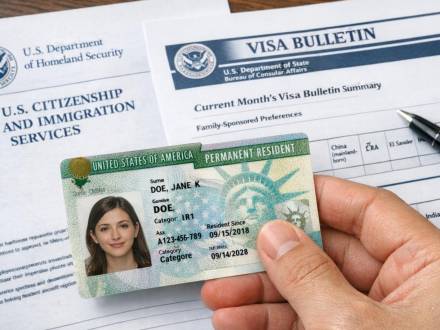
If you've been waiting years for a loved one to immigrate to the United States, September 2026 brings exciting news. The latest visa bulletin shows the biggest movement in family-based visa categories since July—and it could mean your family is getting closer to reunion.
Family immigration can feel like a waiting game. You file a petition, you wait for approval, and then you wait for a visa number to become available. That last step—getting a visa number—depends on the monthly visa bulletin released by the U.S. State Department. In September 2026, many families finally see real progress.
What Is the Visa Bulletin?
The visa bulletin tracks when visa numbers become available for people waiting to immigrate. If you have an approved family immigration petition, your ability to apply for a green card depends on:
- Your priority date (the date your petition was filed)
- Your country of birth (because demand varies by country)
Marriage Fraud and USCIS: Why Your Attorney Matters
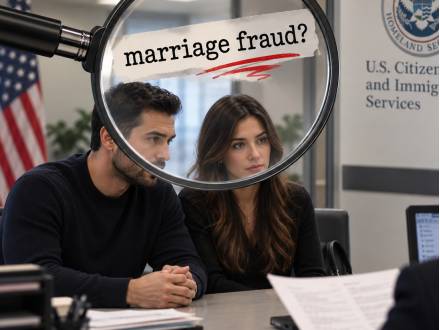
Why USCIS Is Cracking Down on Marriage Fraud
USCIS enforcement efforts against marriage fraud have escalated dramatically. In 2026 alone, the Department of Justice and USCIS have dismantled multiple nationwide marriage fraud rings involving thousands of fraudulent cases. Most recently, 11 defendants were indicted in a decade-long marriage fraud conspiracy that operated across multiple states. These high-profile takedowns signal one thing: USCIS is dedicating significant resources to identifying and prosecuting sham marriages.
This matters to you because heightened enforcement means USCIS officers are applying stricter scrutiny to all marriage-based petitions, not just the obvious ones. If your case involves a spousal petition, you need to understand what triggers investigation and how to defend a legitimate marriage.
The Reality Behind the Crackdown
Marriage fraud undermines the integrity of family-based immigration. Unlike employment-based cases or diversity visas, family-based petitions depend entirely on proving a genuine relationship. When USCIS identifies patterns of fraud, they don't just penalize individual cases. They flag entire networks, interview petitioners separately, and sometimes refer cases for criminal prosecution.
New I-485 Form Changes and I-864 Requirements: What You Must Know About Public Charge Rules in 2026
Understanding the September 2026 Changes to Your Green Card Application
Your immigration case matters. The I-485 form changed on September 18, 2026. The rules for the I-864 affidavit changed too. This guide explains what changed and why it matters to you.
Important: The explanatory guidance is gone. USCIS removed the detailed explanations from the instructions. The form still has instructions, but they no longer explain what each question means or what USCIS is looking for. This means you must figure out what to do on your own. The form asks questions, but there is no detailed guidance telling you how to answer. This is a major change that affects everyone filing after September 18, 2026.
USCIS published a new I-485 form edition that focuses on public charge inadmissibility. Public charge means becoming dependent on government benefits. The government now reviews this differently. There is no grace period. USCIS rejects the old form completely if filed after September 18, 2026.
B-1/B-2 Visa Revocation: Why Your Asylum Application Still Works
Is Fear Is Real, And What You Need to Know

If you received a B-1 or B-2 visa to visit or do business in the U.S., and then filed for asylum, you're probably worried right now.
The Trump administration announced plans to revoke approximately 200,000 B-1 and B-2 visas belonging to people who filed asylum claims. It's the largest mass visa revocation in U.S. history.
And yes, if this affects you, your anxiety is completely understandable.
But here's the truth: Your pending asylum case is not affected by visa revocation. They are two completely separate legal claims. One does not cancel out the other.
This distinction is critical, and it's what separates people who panic from people who understand their actual legal position. Let's break it down.
What the Trump Administration Is Actually Doing
In August 2026, the Trump administration announced the revocation of B-1 and B-2 visas (visitor/business visas) for approximately 200,000 foreign nationals who filed asylum applications.
