
Call 214-506-0671


Supreme Court to Decide Immigrant Bond Hearings
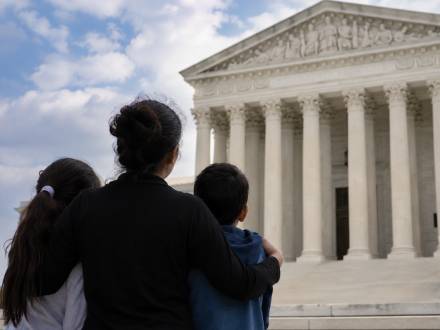
When a family member is detained by Immigration and Customs Enforcement (ICE), most families expect that an immigration judge will review the case and decide whether their loved one can be released on bond while the case moves forward. For many people, especially those who have lived in the United States for years, have no criminal record, and have close family ties here, a bond hearing has long been the path home.
Since 2025, however, many families have been told that their loved one is not eligible for bond at all. On October 1, 2026, the United States Supreme Court agreed to decide whether that policy is lawful. The case, Barbosa da Cunha, will affect immigrants and their families across the country, including here in California. This article explains what the case is about, who may be affected, and what families can do while they wait for a decision.
What Is a Bond Hearing?
A bond hearing is a hearing before an immigration judge to decide whether a person who is detained by ICE may be released while their deportation case, also called a removal case, continues. At the hearing, the judge considers whether the person poses a danger to the community and whether the person is likely to return for future court dates. If the judge is satisfied on both points, the judge may set a bond amount. Once the bond is paid, the person can return home and continue fighting the case with the support of their family, rather than from a detention center.
For decades, many immigrants who entered the United States without inspection were able to request a bond hearing in this way. That changed in 2025.
How the Government's Policy Changed in 2025
In 2025, the Department of Homeland Security (DHS) adopted a new interpretation of immigration law. Under this interpretation, a person who entered the United States without inspection, meaning without being admitted by an immigration officer at a port of entry, is treated as if they had just arrived at the border. This is true even if the person has lived in the United States for ten, twenty, or thirty years.
The practical result is that these individuals are placed in what the government calls mandatory detention. They are not given a bond hearing, and they may remain detained for the entire length of their removal case, which can last many months or even years. Before this change, most people in this situation could ask an immigration judge to consider them for release on bond.
Why the Supreme Court Agreed to Hear the Case
Federal courts across the country have disagreed about whether the government's new interpretation is correct. Nine federal courts of appeals, including the Ninth Circuit, which covers California, have rejected the government's position and ruled that these immigrants may request a bond hearing. Two courts of appeals, the Fifth Circuit and the Eighth Circuit, have agreed with the government. When the federal appeals courts reach different conclusions on an important legal question, the Supreme Court often steps in to provide a single national answer.
The case before the Court involves Ricardo Barbosa da Cunha, a citizen of Brazil who entered the United States about twenty years ago and applied for asylum in 2016. He was arrested in September 2025 and was denied a bond hearing. He has never been charged with or convicted of a crime.
Who May Be Affected by This Decision
The Supreme Court's decision will matter most for people who entered the United States without inspection, who are now in removal proceedings or may be placed in them, and who are detained or at risk of being detained by ICE. This group includes many long-time residents who have United States citizen children, steady employment, and no criminal history.
People who entered the United States with a visa and were inspected and admitted by an officer, but later stayed beyond the time allowed, are generally treated differently under the law and can usually still request a bond hearing. Because every person's immigration history is different, however, it is important to speak with an immigration attorney about your specific situation.
What This Means in California
Until the Supreme Court issues its decision, the rules depend on the federal court of appeals that covers the place where a person is detained. California falls under the Ninth Circuit. On July 30, 2026, in Rodriguez Vazquez v. Bostock, the Ninth Circuit rejected the government's no-bond position for people who entered without inspection and were later arrested inside the United States. As a result, immigrants detained in California, whether in San Francisco, the Bay Area, Sacramento, San Jose, Fresno, Los Angeles, or San Diego, can generally request a bond hearing at this time.
California families should keep three important points in mind. First, the right to a hearing is not a guarantee of release. The immigration judge must still decide whether the person is a danger to the community or a flight risk, and strong evidence is essential. In fact, Mr. Rodriguez Vazquez himself won the right to a hearing but was ultimately denied bond. Second, the Supreme Court's decision could change the rule. If the Court sides with the government, the Ninth Circuit's ruling would no longer protect detained immigrants in California. Third, ICE sometimes transfers detained individuals to facilities in other states, and a person arrested in California may end up in a state where the rules are less favorable.
What This Means in Other States
In the states covered by the Fifth Circuit (Texas, Louisiana, and Mississippi) and the Eighth Circuit (Arkansas, Iowa, Minnesota, Missouri, Nebraska, North Dakota, and South Dakota), immigration judges are currently following the government's no-bond position for people who entered without inspection. Families with a loved one detained in one of these states should not assume that an immigration judge will be able to consider bond, and they should speak with an attorney about the other legal options described below. In most other states, the courts of appeals have ruled that a bond hearing should be available.
When the Supreme Court Is Expected to Decide
The Court is expected to hear arguments in the coming months. Decisions in cases like this one are usually issued by the end of June, which means a final ruling may not come until the summer of 2027. Until then, the current rules will remain in place. Families should not wait for the Supreme Court to act before seeking legal help.
What Families Can Do Now
Even when a bond hearing is not available, or when a bond request has been denied, families still have options. The most important first step is to avoid signing any documents from ICE without first speaking with a licensed attorney. Detained individuals are sometimes asked to sign papers agreeing to leave the United States, and many sign them out of fear or exhaustion. Signing these papers can mean giving up the right to fight the case. We explain this issue in more detail in our article What Are You Actually Signing When ICE Asks You to Agree to Leave?
An attorney may also be able to file a petition for a writ of habeas corpus in federal court. This petition asks a federal judge to review whether a person's detention is lawful. Many detained immigrants have obtained a bond hearing or release through habeas petitions, even while the government's no-bond policy has been in effect. Because a habeas petition is filed in federal court, it is important to work with an attorney who has federal court experience.
In some cases, ICE may have placed a person in the mandatory detention category by mistake. An attorney can review how and when your loved one entered the United States to determine whether the government's classification is correct. An error in classification can open the door to a bond hearing.
ICE also has the authority to release a detained person on parole for urgent humanitarian reasons, such as a serious medical condition, pregnancy, or responsibility as the primary caregiver for a child or an ill family member. A parole request is much stronger when it is supported by documents such as medical records and letters from doctors.
Whatever path your case takes, you will need evidence showing that your loved one has strong ties to the community and will appear for future court dates. It is wise to begin gathering this evidence now. Helpful documents include proof of how long the person has lived in the United States, such as leases, utility bills, or school records; birth certificates for any family members who are United States citizens or lawful permanent residents; proof of employment and tax filings; letters of support from employers, religious leaders, and community members; any relevant medical records; and copies of all immigration documents, including the person's Alien Registration Number (A-Number).
Finally, if anyone in your household may be at risk of detention, it is important to make a family plan in advance. Decide who will care for the children if a parent is detained, keep copies of important documents in a safe place, and write down your attorney's phone number on paper rather than only saving it in a phone.
A Word of Caution About Unlicensed Help
When a family member is detained, families are understandably frightened, and unfortunately that fear is sometimes used against them. Please be cautious of notarios, consultants, and anyone who is not a licensed United States attorney who promises to secure your loved one's release. Detention cases and habeas petitions are serious legal matters, and a mistake can cost a person their chance at release. Before paying anyone for help, ask for their state bar license number and verify it on the state bar's website.
How Hafey & Karim Can Help
Hafey & Karim Immigration Law represents clients nationwide. Based in the San Francisco Bay Area, we serve clients throughout California, including San Francisco, Oakland, Concord, San Jose, Sacramento, and Los Angeles, as well as clients across the country. Our attorneys have extensive experience in removal defense and federal court litigation, including habeas corpus petitions on behalf of detained immigrants.
If a member of your family has been detained, or if you are concerned about the possibility of detention, we invite you to schedule a 30-minute consultation. We will review the facts of the case, explain the available options, and help you take action as quickly as possible.
Summary
The Supreme Court will decide whether immigrants who entered the United States without inspection may be detained without a bond hearing. Most federal courts of appeals, including the Ninth Circuit, which covers California, have ruled that these individuals may request a bond hearing, while the Fifth and Eighth Circuits have sided with the government. In California, a bond hearing is generally available today, although it does not guarantee release, and the Supreme Court's ruling could change the law. A decision may not be issued until the summer of 2027. In the meantime, families have options, including habeas corpus petitions, challenges to an incorrect classification, and requests for parole, and they should not sign any documents from ICE without first consulting a licensed attorney.
Important Disclaimer: This article provides general educational information about immigration detention and bond hearings and is not legal advice. Immigration law changes frequently, and court decisions may change the rules quickly. The information in this article reflects the law and court actions as of October 2026. Every case is different, and you should consult a qualified immigration attorney licensed in your state before making decisions about your case. If you need help finding counsel, you may also visit the American Immigration Lawyers Association (AILA) website.
